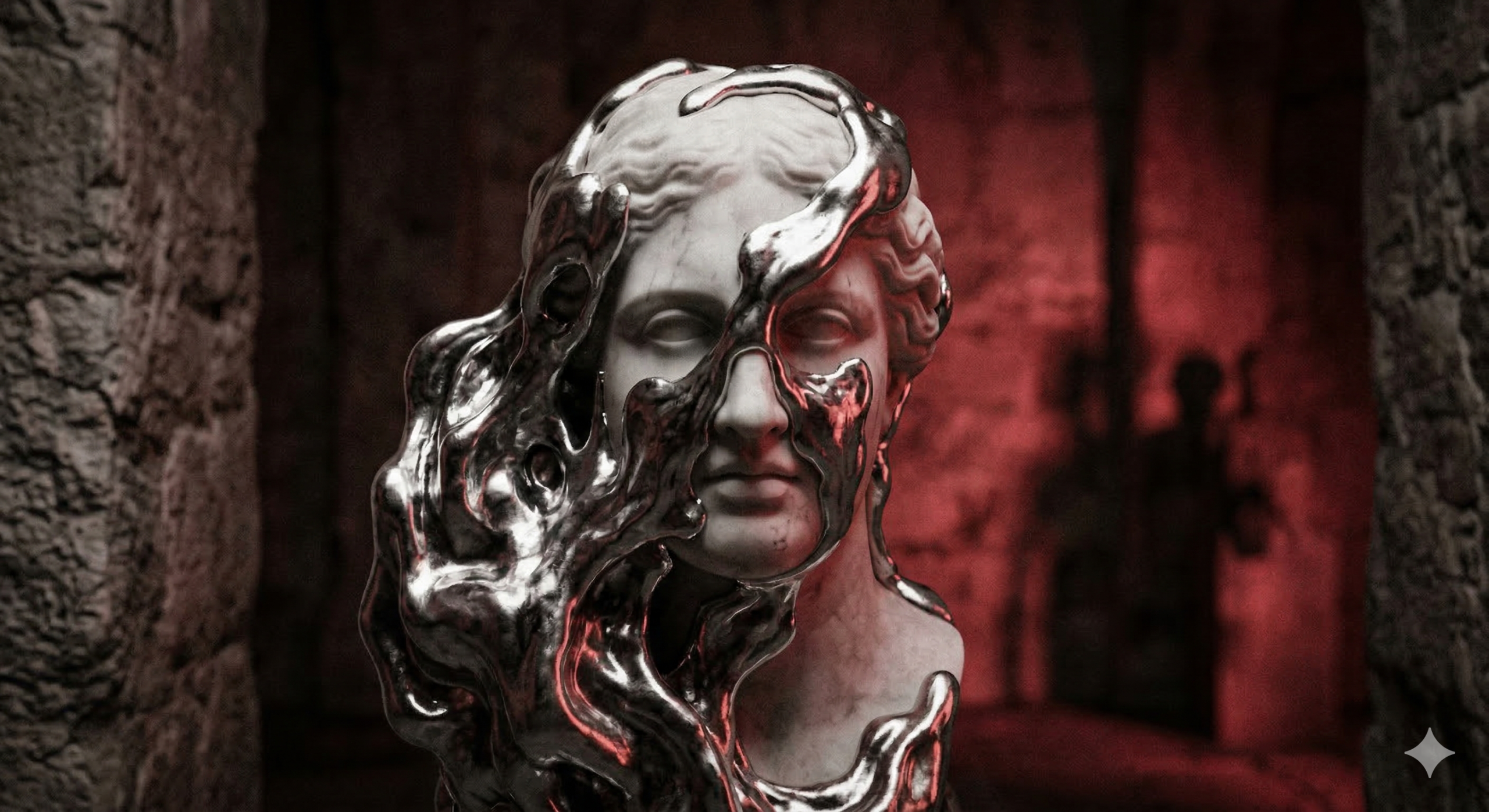
When a brand’s personality outlives the business that built it.
In February 2025, Duolingo ran the most viral brand campaign of the year. By May, their social media accounts were dark, their TikTok was hemorrhaging followers, and their CEO was walking back a public memo. The personality didn’t fail. The problem was that the personality had become the whole thing.
On February 4, 2025, Duolingo posted a simple update: X’s over Duo the Owl’s eyes. Dead. No explanation. The internet responded the way the internet responds to things it loves and doesn’t understand, with chaos, grief, theories, memes, and obsessive engagement. Within 24 hours, Duo had been mentioned 169,000 times online. Conversation spiked 25,560% on announcement day alone. A murder mystery unfolded. A Cybertruck was involved. Dua Lipa reshared something and generated 667,000 engagement actions on her own. The campaign ended with users collectively needing to earn 50 billion XP to “revive” Duo; which meant opening the app, completing lessons, staying engaged.
1.7 billion impressions. Twice the social conversation of that year’s top Super Bowl ads. Organically. It was, by every available metric, the most successful brand campaign of early 2025.
25,560%
Spike in Duo mentions on announcement day
169,000 total mentions in 24 hours.
1.7 billion impressions total.
The Duo Death campaign was the most viral brand moment of early 2025 — not because of a media spend, but because the personality had been consistent enough, long enough, to make people genuinely feel something when it changed.
And then, eleven weeks later, it all collapsed.
✦
The arc — eleven weeks in 2025
February 4, 2025
Duo dies. The internet loses its mind.
The “Duo Death” campaign launches. 1.7 billion impressions. 25,560% conversation spike. Users collectively earn 50 billion XP to revive the mascot. The most viral brand moment of the year so far.
April 28, 2025
CEO publishes the AI-first memo.
Luis von Ahn publishes an internal memo on LinkedIn announcing plans to “gradually stop using contractors to do work AI can handle” and limit new headcount when tasks can be automated. The reasoning: Duolingo had used AI to publish 150 new language courses in a single year — nearly doubling a catalog that took a decade to build. The framing: productivity and scale. The audience read it as: the humans who made this personality are being replaced.
May 1–16, 2025
The comments turn.
Backlash builds across TikTok and Instagram. A video on a trending audio received replies like “Mama, may I have real people running the company” — 69,000 likes. The same account that had generated billions of impressions three months earlier is now a lightning rod. Users who had grieved a cartoon owl are now grieving something they can’t quite name.
May 17, 2025
Complete social media blackout.
Duolingo wipes all content from TikTok and Instagram, leaving only cryptic messages. The accounts that had been the most consistently engaging brand presence on the internet go dark. 400,000 TikTok followers lost in weeks.
May 24, 2025
Von Ahn backtracks.
“I do not see AI as replacing what our employees do.” The clarification comes too late to undo the damage entirely, though the accounts eventually return. The personality returns. But something had shifted in the relationship between the brand and the community that had built itself around it.
Three months. The most viral campaign of the year to a social media blackout and 400,000 lost followers. What happened?
✦
The personality was real. That’s what made it fragile.
The standard read of this story is that Duolingo made a communications mistake. The AI-first memo was badly timed, badly framed, and landed in the middle of a cultural moment when audiences are hypersensitive to anything that sounds like “we’re replacing humans with AI.” Better PR, better timing, different framing — and the backlash doesn’t happen, or at least doesn’t snowball the way it did.
That reading is correct but incomplete. The communications mistake was real. But the reason it hit so hard — the reason a memo about internal operations triggered a community revolt — is more interesting and more instructive than a framing error.
Duolingo had spent four years building one of the most distinctively human brand personalities on the internet. Not human in the sense of warm or empathetic — human in the sense of specific, unpredictable, consistent in its inconsistency, capable of surprising you. Duo the Owl was unhinged in a way that felt genuinely authorial. The social team had creative latitude that most corporate social accounts never get. The personality wasn’t performed — or at least, it didn’t feel performed — because it was consistent enough, over long enough, to feel like it came from somewhere real.
✦
The deeper problem: personality is not the same as identity.
Here’s the distinction I want to sit with, because I think it’s the one that matters for any brand building a strong personality right now.
Personality is how a brand shows up. It’s the tone, the humour, the specific way of seeing the world that makes a brand recognisable in a feed. Identity is what a brand believes. It’s the convictions that drive decisions — including decisions about how to change, when the business needs to change.
Duolingo’s personality was extraordinary. The identity underneath it — the beliefs that should have been stable enough to survive a strategic pivot — was less clear. What did Duolingo actually believe about language learning, about the relationship between technology and human connection, about what it owed its community? The personality gave an implicit answer: that human creativity and irreverence were at the core. But that answer had never been made explicit enough to survive a moment when the business made a decision that contradicted it.
What would Duolingo have refused to do — even if it were commercially convenient? If the brand had been able to answer that question clearly, in the room, before April 2025, the memo either wouldn’t have been written that way — or the community would have had enough context to understand it differently.
Brands with strong identities can change their personalities. Apple has looked completely different in different decades — the rainbow logo, the “Think Different” campaign, the clean Jony Ive minimalism, the current softer direction. The personality shifted. The identity — the belief that technology should be beautiful, accessible, and intuitive; that it should feel like it was made for humans — didn’t. That stability is what let the personality changes feel like evolution rather than crisis.
Duolingo’s personality was so dominant, so well-executed, so central to how the brand was perceived, that it had started functioning as the identity. Which meant when the business needed to communicate a shift — even a legitimate, strategically coherent shift — there was nothing underneath the personality to hold the community’s trust through it.
What this means for brands building personality right now
What this means for brands building personality right now
In 2026, the pressure to build a distinctive brand personality has never been higher. The Duolingo playbook spawned hundreds of imitators. Most of them bad. A few genuinely good. All of them missing the point.
The lesson isn’t “build a strong personality.” It’s “know what your personality is in service of.”
Personality without identity is a costume. Brilliant, engaging, viral — and structurally hollow. It will hold until the business needs to change direction. And businesses always eventually change direction.
The question isn’t what your brand should sound like. It’s: what do you believe that would still be true if you changed everything about how you looked and sounded?
If there’s no answer to that — if the personality is the whole answer — you’re one strategic pivot away from a community that feels betrayed. Not because you lied. Because they believed you more than you believed yourself.
The actual damage
Duolingo’s revenue recovered. The accounts came back. The personality returned. By Q4 the metrics were strong.
But something shifted that metrics don’t capture: the brand moved from beloved to functional. Users who had grieved a cartoon owl were now simply completing lessons. The relationship that had made Duolingo culturally irreplaceable — that irrational attachment that no competitor could buy — quietly reclassified itself as a subscription.
That’s not a PR failure. That’s a brand equity failure dressed in recovered numbers.
Duo the Owl is alive. But the community’s willingness to feel something on behalf of a language app — that specific, irrational, extraordinarily valuable thing — is harder to recover than a follower count.
Every brand building personality right now should know which one they’re risking.
Brand Strategy. Brand Identity. Case Observation. Personality vs Identity
References:
Tribu Digital (Feb 2025) · BuzzRadar (Jul 2025) · The Data Dynamo (Jul 2025) · Duolingo Q4 2025 Earnings Call · SignalBloom AI (Feb 2026) · Duolingo Company Strategy Overview